
How it works
Three steps. Five minutes. No bank link.
Pakkuvam does not need your transactions, your PAN or your exact salary. It needs enough of a picture to tell you whether your household looks safe, and what one thing would make it safer.

- 1
Share ranges, not exacts
Choose approximate bands for income, EMIs and essential spending. Nothing is linked to your bank, and exact numbers are never required.
- Approximate income band, including irregular months
- EMIs and recurring commitments as ranges
- Essential household spending, and who depends on you
- 2
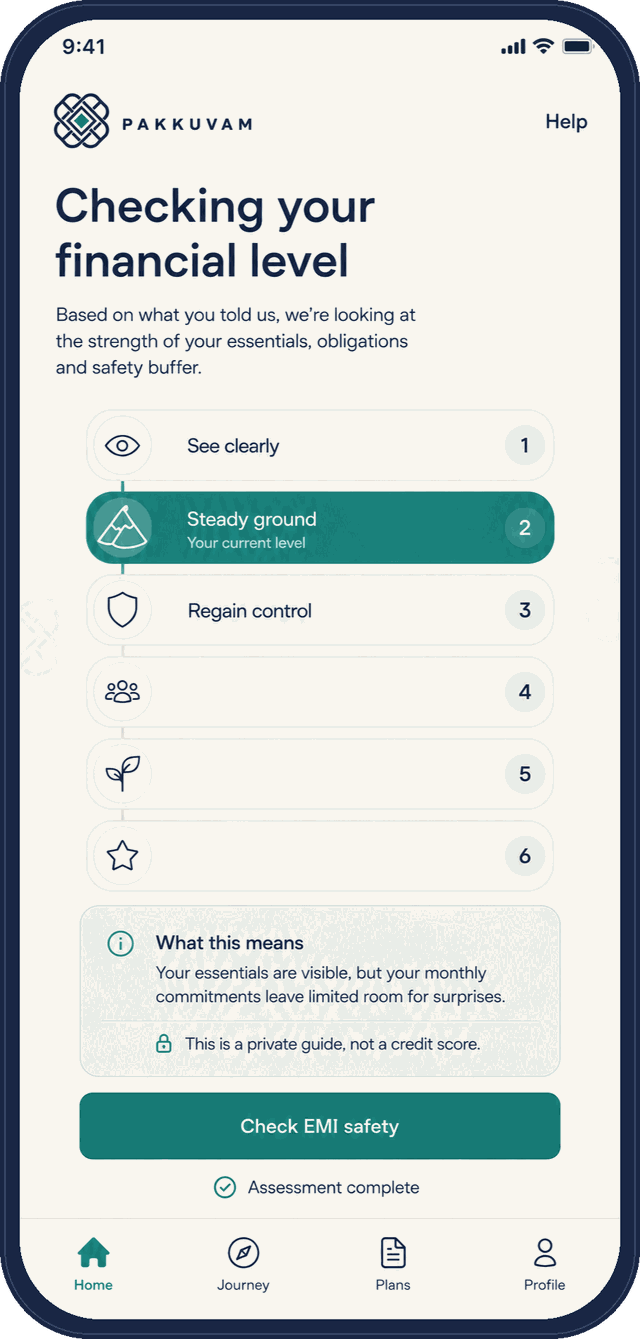
See your level, risks and next step
Pakkuvam places your household on one of seven levels, shows your safety score across cash flow, debt, shock resilience and protection, and names your top risks before recommending anything.
- Your level, and the reason for it in plain language
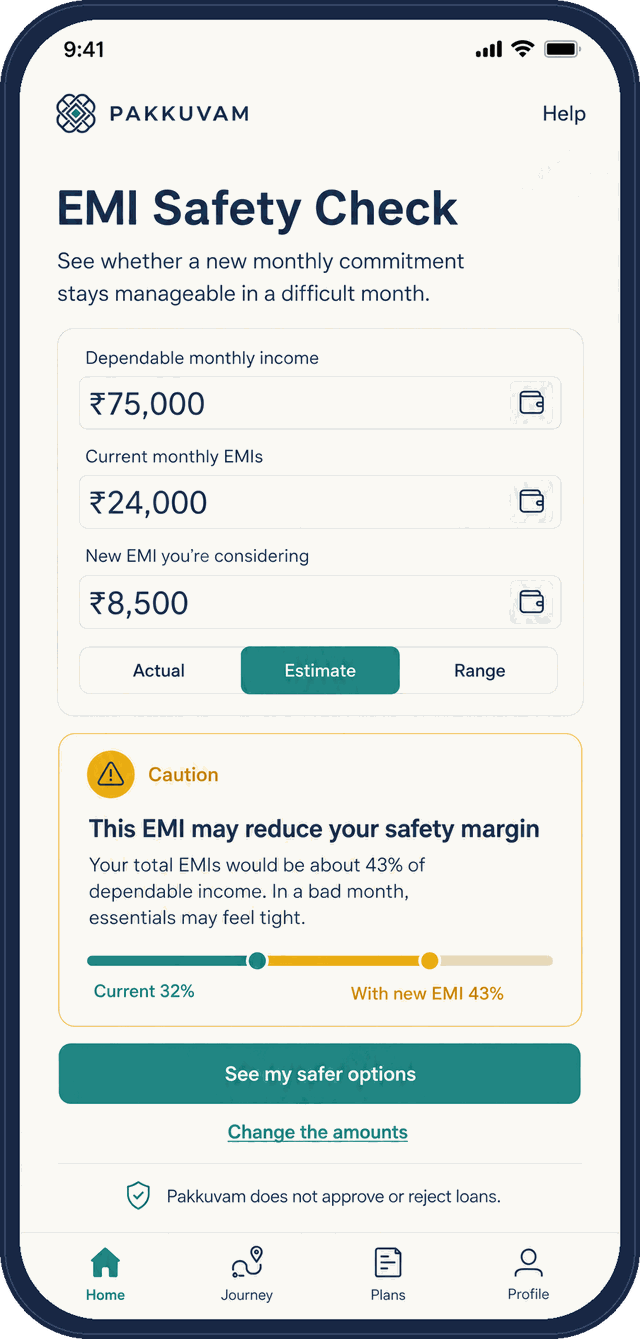
- EMI safety measured against a bad month, not an optimistic one
- A bad-month check: shortfall, runway and vulnerable commitments
- 3
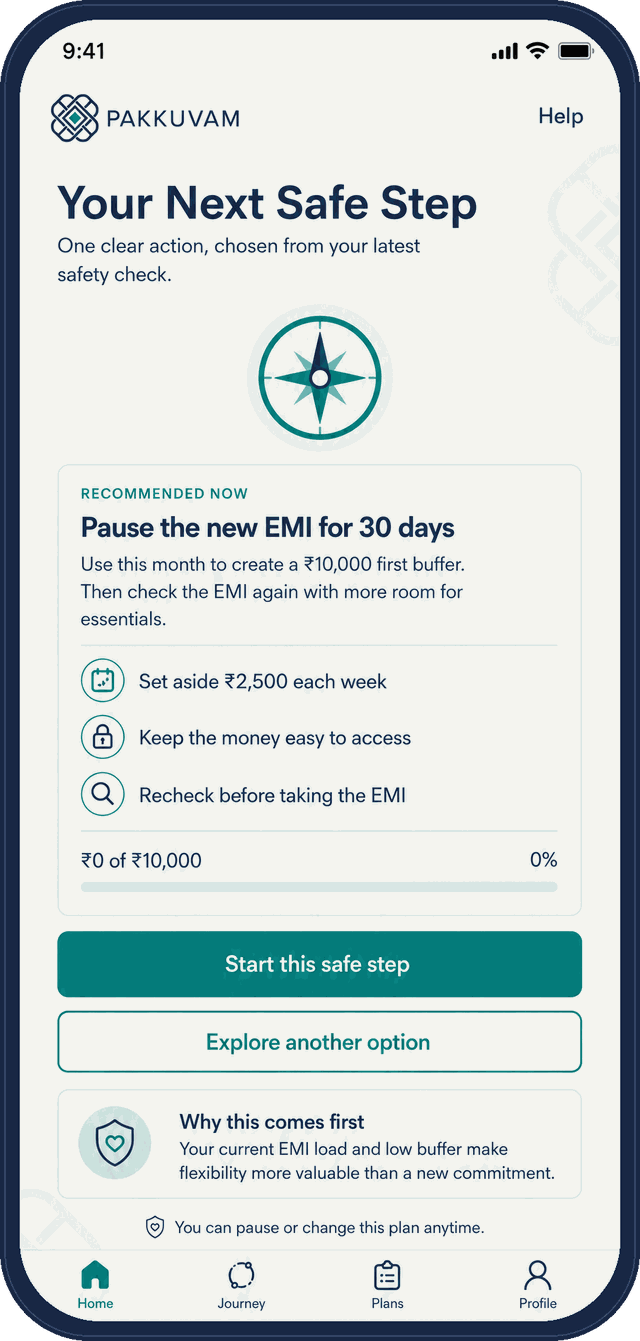
Take one safe step
You get one primary action, and at most two supporting actions. Complete a mission, build the next buffer stage, or test a purchase before committing to it.
- Buffer stages, from 7 days to 6 months of survival expenses
- Pakkuvam Steps: small missions that do not erase your progress
- Can I safely afford this? Test the full effect before committing
Signature: The Pakkuvam Pause — before a major commitment, pause to see the normal-month and bad-month effect side by side.
Wise decisions. Safer tomorrow.
Join the waitlist and we will invite you in small batches, so we can listen properly.